

Remember when everyone and their grandma was grinding Axie Infinity, convinced they'd found the secret to making money while gaming? Yeah, those were wild times. Fast forward to 2025, and the GameFi landscape looks completely different. But here's the thing, writing off play-to-earn as "dead" is like saying video games died after the Atari crash. Spoiler alert: they didn't.
Let's cut through the noise and talk about what's actually happening in GameFi development right now.
What Went Wrong with Early Play-to-Earn?
Look, we need to be honest about why the first wave of P2E games crashed harder than a poorly coded NFT marketplace.
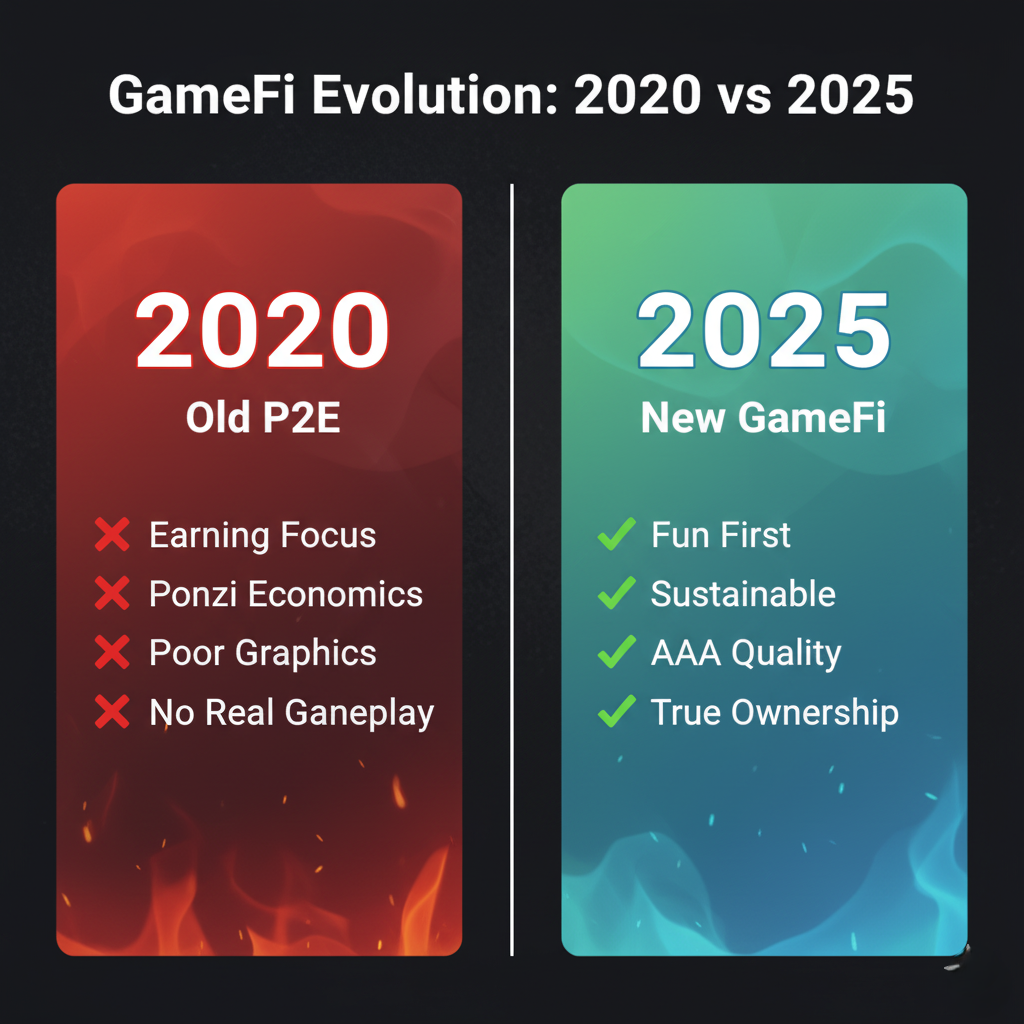
The original play-to-earn model had some serious flaws. Most games were built around earning, not playing. If your game's main selling point is "you can make money" instead of "this is actually fun," you've already lost the plot. Players were essentially workers, not gamers. When the token prices tanked, everyone left. No shock there.
The economic models were unsustainable too. These games relied on new players constantly joining to pay existing players—which, let's face it, sounds suspiciously like a Ponzi scheme. Once the hype died down, the whole house of cards collapsed.
And can we talk about the actual gameplay? Most early P2E games had the entertainment value of watching paint dry. Clunky interfaces, repetitive tasks, graphics from 2005 it was rough.
The Evolution: From Play-to-Earn to Play-AND-Earn
Here's where things get interesting. The smart developers learned from those mistakes. The new wave of GameFi isn't about playing TO earn—it's about playing games that happen to have earning potential built in.
Think of it like this: traditional games have been monetizing players for decades through microtransactions, battle passes, and loot boxes. The difference? In Web2 games, all that value goes to the developers. In Web3 games, players can actually own their assets and potentially profit from their time investment.
The focus has shifted dramatically:
- Gameplay First: New GameFi projects are hiring actual game designers, not just blockchain developers. Imagine that! Games are being built to be genuinely entertaining, with earning as a bonus feature rather than the main attraction.
- Sustainable Economics: Developers are implementing deflationary mechanisms, utility-driven tokens, and balanced reward systems that don't require infinite growth to function.
- Real Ownership: True digital ownership is becoming the norm. Your in-game items are actually yours—you can trade them, sell them, or take them to other compatible games.
What's Hot in GameFi Development for 2025?
The GameFi space is buzzing with innovation right now. Here's what's actually gaining traction:
- AI-Powered Gaming: We're seeing games that use AI to create dynamic experiences, personalized storylines, and smarter NPCs. It's not just about blockchain anymore—it's about creating genuinely next-level gaming experiences.
- Cross-Platform Compatibility: Games that work seamlessly across mobile, PC, and console are winning. Nobody wants to be chained to their computer to play.
- Social Gaming & Guilds: The community aspect is massive. Games are incorporating guild systems, tournaments, and social features that make the experience more about connection than grinding.
- AAA Quality Production: Big-budget studios are finally entering the space. We're talking games with production values that match or exceed traditional titles.
Where LBM Solutions Fits Into This Picture
Speaking of quality development, companies like LBM Solutions are at the forefront of this GameFi evolution. They're not just jumping on the blockchain bandwagon—they're actually thinking about sustainable game design.
LBM Solutions focuses on building GameFi projects that prioritize user experience and long-term viability. They understand that a successful Web3 game needs solid tokenomics, engaging gameplay, and a community that sticks around because they want to, not because they're chasing quick profits.
Their approach combines traditional game development principles with blockchain innovation, which is exactly what this space needs. Instead of slapping NFTs onto a mediocre game and calling it revolutionary, they're building experiences that make sense for both gamers and crypto enthusiasts.
The Reality Check: Is GameFi Worth It in 2025?
Let's be real for a second. GameFi isn't going to replace traditional gaming, and that's okay. It doesn't need to.
What we're seeing is the emergence of a new category. Some people will always prefer traditional games where they just pay once and play. Others will gravitate toward Web3 games where they have true ownership and earning potential. There's room for both.
The key is managing expectations. If you're getting into GameFi purely to get rich, you're probably going to be disappointed. But if you're looking for games that respect your time investment, give you actual ownership of your digital assets, and offer the possibility of earning while you play? That's a different story.
What to Watch For
As we move through 2025, keep an eye on these trends:
- Regulation clarity is coming, which will actually help the space mature
- Mobile-first gaming is dominating, making GameFi more accessible
- Interoperability between games is becoming real, not just a buzzword
- Established gaming companies are launching Web3 projects with actual budgets
The Bottom Line
Is play-to-earn dead? The old, unsustainable version? Yeah, probably. And good riddance. But GameFi as a concept? It's just getting started.
The future of GameFi isn't about playing games like it's a second job. It's about enjoying genuinely entertaining experiences where you happen to own your digital assets and might earn some rewards along the way. It's about games built by people who understand both gaming and blockchain, not just one or the other.
2025 is shaping up to be the year GameFi grows up. The hype is gone, which is actually a good thing. Now we can focus on building games that people actually want to play.